
Why the apple that catches your eye may not always be the one to buy
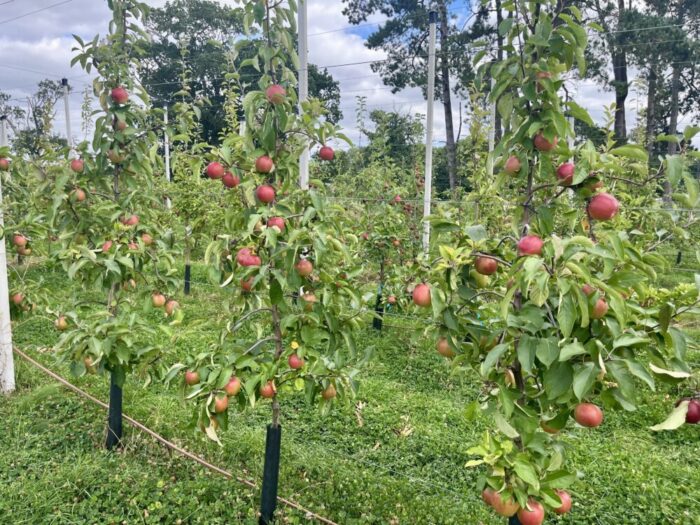
Taste and freshness are the most frequently selected purchase factors for apples yet both depend on decisions made long before they reach the shops. A recent RTÉ Brainstorm article by Alberto Ramos Luz and Jean do Prado, Teagasc, and Francesco Noci, ATU, looks at the factors that help determine both.
Picture yourself in front of an apple display: red, green or striped varieties, one on promotion, another Irish-grown, and a familiar name beside one you have never tried. You cannot taste any of them, yet within seconds, one goes into the basket and another stays behind. Three years ago, we asked why we should be growing more apples in Ireland. Now we ask: can we grow the apples people actually want to choose – and choose again?
The promise before the bite
Buying fresh fruit involves prediction. Colour, size, variety, price, origin and condition provide clues about what an apple might be like to eat. Then comes the first bite: crisp or soft, juicy or dry, sweet or sharp. The promise made at the shelf is either kept or broken.
Our study asked 898 adults living in Ireland about apple consumption, shopping, valued qualities and responses to different apple images. It was not a national opinion poll, so the percentages should not be read as national market shares, but the findings highlight questions worth testing more widely.
What matters in the apple aisle?
Taste (61.6%) and freshness (60.2%) were the most frequently selected purchase factors. Grocery stores and supermarkets were by far the most commonly selected place to buy apples. Yet taste cannot be checked before purchase and freshness is only partly visible. Both depend on decisions made long before the apple reaches the shelf, from variety and harvest maturity to storage and handling.
Age was the clearest source of differences. Older respondents generally ate apples more often and placed greater importance on health, but responses to colour, price, origin and promotions did not form one simple “older consumer” profile.
There is no single definition of a good apple
When we looked at six quality characteristics together, three ideas of quality emerged: texture and juiciness; size and colour; and sweetness–acidity balance. Together, they accounted for about three quarters of the differences in ratings.
A single “quality” score can therefore hide important trade-offs. An apple can excel in crispness and juiciness while differing in sweetness and acidity. Appearance matters too, but it does not replace eating quality.
What colour do people prefer?
People also rated photographs of apples with different skin colours and patterns. We matched their ratings to objective colour measurements of the original fruit. A clearer pattern emerged: preference increased along a colour gradient towards brighter, more vivid red apples, before levelling off near the upper end.
This turns a visual impression into something measurable, but not yet a commercial colour target. People viewed the photographs on their own devices, where screen settings may have altered the colours they saw. Real fruit is the next step.
There are no neat types of apple buyer
It is tempting to divide shoppers into simple characters: the bargain hunter, the health buyer or the local-food supporter. Our results did not justify those boxes.
When we looked at these choices together, people did not fall into neat groups but along a spectrum. Brand, colour, size, Pink Lady and price appeared towards one end; origin, variety and direct purchasing channels towards the other. The same person can shop on price one week and seek a particular variety or local apple another time.
From the survey back to the orchard
Optional comments added another layer, with recurring interest in Irish-grown apples, cultivar choice and consistent eating quality. They cannot represent the whole sample but highlight practical questions worth pursuing. For Irish growers and researchers, the message is not to chase one “perfect” apple, but to consider eating quality, flavour balance and appearance alongside consumer responses.
And this brings us to the next piece of the puzzle. The survey told us what people value and how they respond to appearance. Next, we will put real apples in front of consumers, who will first evaluate the whole fruit visually and then taste it, rating crispness, juiciness, sweetness, acidity and overall liking.
We can then ask a deceptively simple question: does the apple that catches your eye also deliver the eating experience you expected?
We plan consumer apple tastings around Carlow and Galway, so keep an eye out for opportunities to take part and help us understand what the Irish apple of the future should look and taste like.
Growing more apples in Ireland remains an important ambition. Understanding which apples people will notice, enjoy and choose again is how that ambition becomes a lasting market.
Alberto Ramos Luz is a Fruit Research Officer in the Horticulture Development Department at Teagasc. Jean do Prado is a Teagasc Walsh Scholar working on the Smart Apple project at Teagasc and Atlantic Technological University. Francesco Noci is a Food Science lecturer and researcher in the School of Science and Health at Atlantic Technological University.
The above article first appeared in RTÉ Brainstorm, read the full article here.